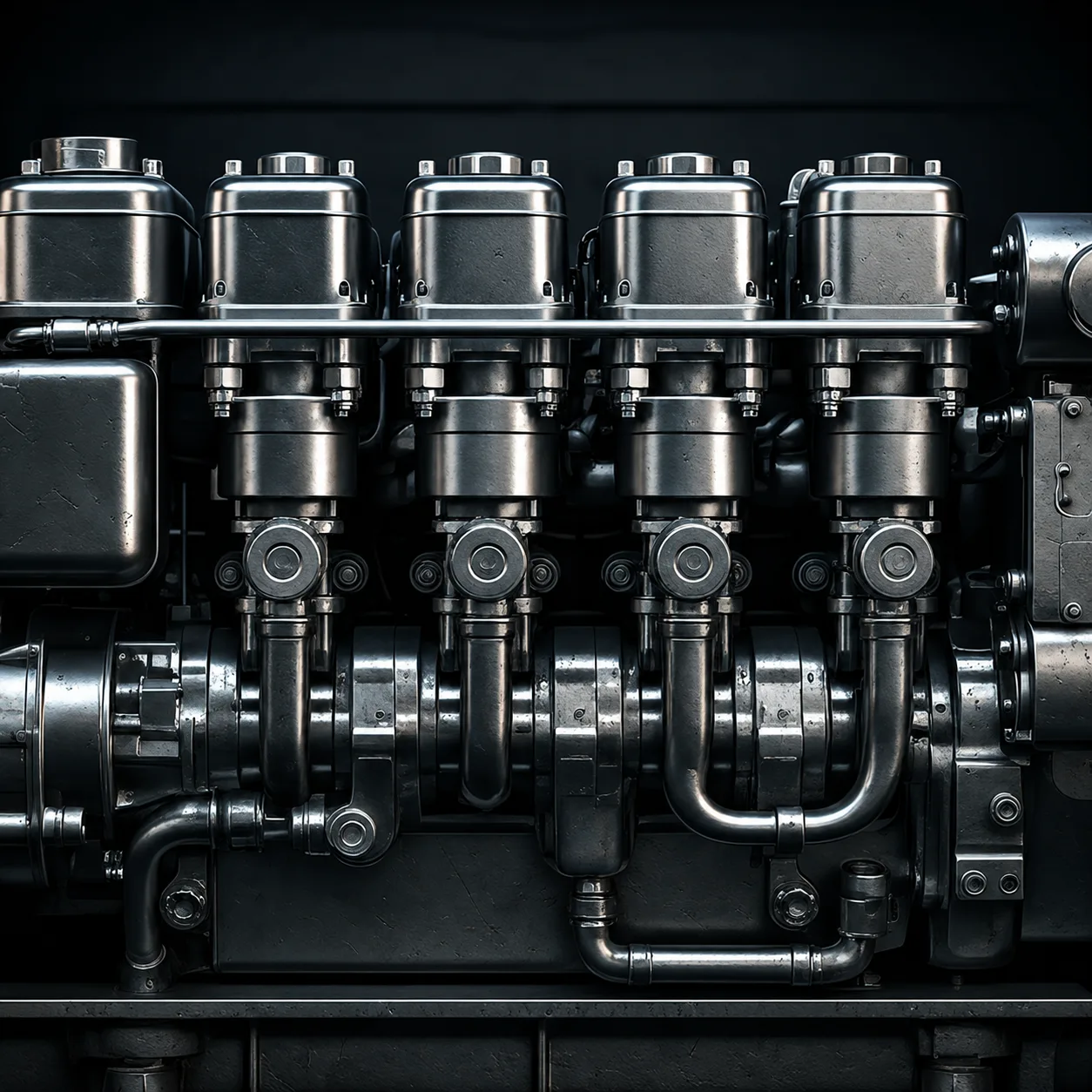
The Vital Components:
01.
Introduction to Diesel Engine Parts in Locomotives
Diesel locomotives are powerful machines that depend on multiple interconnected engine components to deliver reliable performance, high efficiency, and long-distance transportation capability. Each part, from the fuel injection system and pistons to the crankshaft, lubrication system, cooling system, air intake, exhaust system, electrical system, and control units, performs an important function in converting fuel energy into locomotive power. These systems work together to maintain smooth operation, improve fuel efficiency, reduce emissions, and protect the engine from damage. Understanding the key diesel engine parts helps highlight the advanced engineering behind modern locomotives and the importance of proper maintenance for safe and efficient railway operations.
02.
Fuel Injection System: The Core of Diesel Engine Performance
The fuel injection system is one of the most important components of a diesel locomotive engine because it controls the delivery of fuel into the combustion chamber with precise timing and pressure. It includes essential parts such as fuel injectors, injector pumps, fuel filters, and pressure regulators that work together to ensure efficient fuel combustion. The injectors break the diesel fuel into fine droplets, allowing it to mix properly with compressed air for maximum power generation, while injector pumps maintain the required fuel pressure for consistent engine performance. Fuel filters remove dirt and impurities from the fuel supply, protecting sensitive engine components from damage, and pressure regulators maintain stable fuel flow during different operating conditions. Modern diesel locomotives often use electronically controlled injection systems that automatically adjust fuel delivery according to engine load, improving fuel efficiency, reducing emissions, and increasing overall engine reliability. A well-maintained fuel injection system is essential for achieving maximum power output, smooth operation, and long service life of a locomotive engine.
03.
Pistons, Connecting Rods, and Cylinder Components: Power Generation Inside the Engine
Pistons, connecting rods, and cylinder components are the main mechanical parts responsible for converting the energy produced by diesel combustion into usable engine power. Inside the cylinder, diesel fuel burns with compressed air, creating high pressure that pushes the piston downward. The connecting rod transfers this movement from the piston to the crankshaft, where it is converted into rotational power to drive the locomotive. Cylinder walls provide a strong and precise surface for piston movement, while piston rings and seals maintain proper compression, prevent fuel and oil leakage, and improve engine efficiency. Bearings within the connecting rod assembly reduce friction and allow smooth movement under extreme pressure and temperature conditions. Since these components operate under heavy loads and continuous stress, they are manufactured from strong, durable materials and require proper lubrication and maintenance. The efficient performance of pistons, connecting rods, and cylinder parts directly affects locomotive power, fuel economy, engine reliability, and overall operational life.
04.
Crankshaft and Camshaft System: Converting and Controlling Engine Power
The crankshaft and camshaft are essential components that control the movement and power delivery of a diesel locomotive engine. The crankshaft converts the linear motion of the pistons into rotational energy, which is then transferred through the drivetrain to move the locomotive. Designed to withstand extreme forces generated during combustion, the crankshaft operates with the support of bearings that reduce friction and ensure smooth rotation. The camshaft works alongside the crankshaft by controlling the opening and closing of engine valves, allowing the correct amount of air to enter the cylinders and exhaust gases to leave at the proper time. This precise timing ensures efficient combustion, improved fuel economy, and consistent engine performance. Additional components such as balance shafts, flywheels, and harmonic balancers help reduce vibrations, maintain engine stability, and provide smoother operation. Together, the crankshaft and camshaft system plays a critical role in maintaining power output, mechanical balance, and long-term reliability of diesel locomotive engines.
05.
Lubrication System: Protecting Engine Components and Improving Efficiency
The lubrication system is a vital part of a diesel locomotive engine that ensures smooth operation by reducing friction, controlling heat, and preventing wear between moving components. It consists of important parts such as the oil pump, oil filter, oil pan, oil cooler, and dipstick, which work together to maintain a continuous supply of clean and properly conditioned engine oil. The oil pump circulates lubricant throughout the engine, providing protection to critical parts like pistons, bearings, crankshaft, and camshaft, while the oil filter removes dirt, metal particles, and other contaminants that could damage internal components. The oil cooler helps maintain the correct oil temperature, especially during heavy-duty locomotive operations, and the oil pan stores the required oil supply for continuous circulation. Proper lubrication improves engine performance, reduces friction-related damage, increases fuel efficiency, and extends the service life of expensive engine components. Regular inspection and maintenance of the lubrication system are essential to ensure reliable locomotive operation and prevent costly mechanical failures.
06.
Cooling System: Maintaining Optimal Engine Temperature
The cooling system is a crucial component of a diesel locomotive engine that prevents overheating and ensures reliable performance under heavy operating conditions. During combustion, diesel engines generate extremely high temperatures, and without an effective cooling system, excessive heat can damage important engine components and reduce efficiency. The system includes essential parts such as radiators, radiator caps, thermostats, water pumps, coolant hoses, and reservoirs that work together to regulate engine temperature. The water pump circulates coolant throughout the engine, absorbing heat from internal components and transferring it to the radiator, where the heat is released into the surrounding environment. The thermostat controls coolant flow and helps the engine maintain its ideal operating temperature, while hoses and reservoirs ensure proper coolant storage and circulation. A properly maintained cooling system improves engine durability, prevents overheating-related failures, and allows diesel locomotives to operate continuously while carrying heavy loads over long distances.
07.
Exhaust System: Managing Emissions and Engine Gas Flow
The exhaust system is an important part of a diesel locomotive engine that safely removes combustion gases while improving engine efficiency and controlling emissions. After fuel combustion takes place inside the cylinders, the exhaust system collects and directs the hot gases away from the engine through components such as exhaust manifolds, mufflers, catalytic converters, EGR valves, and oxygen sensors. The exhaust manifold gathers gases from individual cylinders and channels them into the exhaust pipes, while the muffler reduces noise produced by high-pressure exhaust flow. Modern diesel locomotives also use emission control components like catalytic converters and exhaust gas recirculation (EGR) systems to reduce harmful pollutants and meet environmental standards. Oxygen sensors monitor the exhaust gases and provide feedback to the engine control system, helping maintain efficient fuel-air balance and better combustion performance. A properly functioning exhaust system improves engine reliability, reduces emissions, controls noise, and ensures that the locomotive operates efficiently while meeting modern environmental requirements.
08.
Electrical System: Powering and Controlling Locomotive Operations
The electrical system is a critical part of a diesel locomotive that provides the power required for engine starting, monitoring, control, and operation of various onboard systems. It includes major components such as the alternator, battery, ignition system, wiring harness, and electronic control units that work together to maintain efficient engine performance. The alternator generates electrical energy by converting mechanical power from the engine, while the battery stores this energy and supplies power during startup and low-power conditions. The electrical system also supports sensors, control modules, and monitoring devices that continuously track engine conditions such as temperature, speed, fuel supply, and overall performance. Advanced diesel locomotives use electronic control systems to automatically adjust engine functions, improve fuel efficiency, and detect potential problems before major failures occur. A reliable electrical system ensures smooth engine operation, accurate control, reduced downtime, and improved safety throughout locomotive service.
09.
Drivetrain System: Transferring Engine Power to Locomotive Movement
The drivetrain system is responsible for transferring the mechanical power generated by the diesel engine into the movement of the locomotive. It consists of important components such as the clutch, flywheel, transmission, transfer system, differential, and drive shafts that work together to deliver power efficiently to the wheels. The flywheel helps store and balance rotational energy from the engine, while the clutch manages the connection between the engine and power transmission system. The transmission controls the distribution of power according to operating conditions, ensuring smooth acceleration and efficient performance. Drive shafts and related components transfer this power to the wheels while reducing vibrations and maintaining stability during operation. In locomotives, where engines must handle extremely heavy loads and long operating hours, a strong and reliable drivetrain system is essential for maintaining consistent pulling power, improving efficiency, and ensuring smooth railway performance. Proper maintenance of drivetrain components helps prevent power losses, reduces mechanical wear, and extends the overall service life of the locomotive.
10.
Air Intake System: Supplying Clean Air for Efficient Combustion
The air intake system plays a vital role in diesel locomotive performance by providing a continuous supply of clean and properly measured air required for combustion. Since diesel engines depend on compressed air to ignite fuel efficiently, the quality and quantity of incoming air directly affect power output, fuel efficiency, and engine reliability. The system includes components such as air filters, airflow sensors, mass air flow sensors, throttle systems, intake manifolds, and intake valves that work together to control airflow into the engine cylinders. Air filters remove dust, dirt, and other harmful particles that could damage internal engine components, while airflow sensors monitor the amount of air entering the engine and provide information to the control system for accurate fuel adjustment. The intake manifold distributes air evenly to each cylinder, ensuring balanced combustion and consistent engine performance. In many modern diesel locomotives, turbochargers and intercoolers are also integrated with the air intake system to increase air pressure and improve engine power. A well-maintained air intake system enhances combustion efficiency, reduces fuel consumption, minimizes emissions, and helps the locomotive operate smoothly under heavy-duty conditions.
11.
Control System: Intelligent Monitoring and Engine Management
The control system is the intelligent management center of a modern diesel locomotive engine, responsible for monitoring, adjusting, and optimizing various engine operations. It consists of essential components such as sensors, switches, the Electronic Control Unit (ECU), wiring harnesses, and fuel delivery control systems that work together to maintain efficient engine performance. Sensors continuously collect real-time information about important factors like engine temperature, fuel pressure, air intake, speed, and exhaust conditions, while switches help control different engine functions. The ECU processes this information and automatically adjusts fuel injection, ignition timing, airflow, and other operating parameters to achieve maximum efficiency and reliability. The wiring harness connects all electrical components, allowing smooth communication between sensors, control units, and engine systems. Advanced control systems help reduce fuel consumption, lower emissions, improve engine response, and identify potential issues before they cause major failures. By providing accurate monitoring and automatic adjustments, the locomotive control system plays a key role in maintaining safe, powerful, and efficient railway operations.
12.
Turbocharger and Intercooler System: Increasing Engine Power and Efficiency
The turbocharger and intercooler system is an important performance-enhancing component in diesel locomotive engines, designed to increase power output while improving fuel efficiency. A turbocharger uses energy from exhaust gases to compress incoming air and force a greater amount of oxygen into the engine cylinders. This increased air supply allows more diesel fuel to burn effectively, resulting in higher power generation without significantly increasing engine size. However, compressed air produced by the turbocharger becomes extremely hot, which can reduce combustion efficiency. The intercooler solves this problem by cooling the compressed air before it enters the combustion chamber, increasing air density and allowing better fuel combustion. Together, the turbocharger and intercooler improve engine performance, reduce fuel consumption, and help control emissions by ensuring more complete combustion. In heavy-duty diesel locomotives, where maximum power and reliability are required for hauling large loads over long distances, this system plays a crucial role in achieving efficient and consistent engine operation. Proper inspection and maintenance of turbochargers and intercoolers help prevent power loss, overheating, and reduced engine performance.
13.
Fuel Delivery and Injection Control System: Ensuring Efficient Fuel Management
The fuel delivery and injection control system is a key component of diesel locomotive engines that ensures the precise supply of fuel required for efficient combustion and maximum engine performance. This system includes components such as fuel pumps, injectors, fuel filters, pressure regulators, and electronic control mechanisms that work together to deliver diesel fuel at the correct pressure, quantity, and timing. The fuel pump transfers fuel from the storage tank to the engine, while filters remove impurities that could damage sensitive injection components. Fuel injectors then atomize the diesel into fine droplets, allowing it to mix evenly with compressed air inside the combustion chamber for efficient burning. Modern locomotives use advanced electronic control systems to automatically adjust fuel delivery according to engine load, speed, and operating conditions. This precise management improves fuel economy, increases power output, reduces emissions, and ensures smooth engine operation. Regular maintenance of fuel system components is essential to prevent contamination, injector problems, and performance issues, helping the locomotive achieve long-term reliability and operational efficiency.
14.
Maintenance and Inspection of Diesel Locomotive Engine Components
Regular maintenance and inspection are essential for ensuring the reliability, safety, and long service life of diesel locomotive engines. Since locomotive engines operate under extreme conditions, including heavy loads, continuous running hours, high temperatures, and intense mechanical stress, every component must be carefully monitored and maintained. Routine maintenance includes checking fuel injection systems, inspecting pistons and cylinders, maintaining lubrication levels, cleaning filters, monitoring cooling systems, and examining electrical and control components. Proper lubrication prevents excessive friction, while timely replacement of worn parts reduces the risk of unexpected breakdowns. Advanced diagnostic systems also help engineers identify potential problems by analyzing data from sensors and electronic control units. Preventive maintenance not only improves engine performance but also reduces operational downtime, lowers repair costs, and increases fuel efficiency. By following proper inspection schedules and using high-quality replacement components, railway operators can ensure that diesel locomotives continue to deliver reliable performance, power, and safety throughout their service life.
15.
Future of Diesel Locomotive Engine Technology and Conclusion
Diesel locomotive engines represent a remarkable achievement in mechanical and engineering innovation, combining multiple advanced systems to deliver powerful, efficient, and reliable railway transportation. From fuel injection systems and combustion components to lubrication, cooling, exhaust, electrical, air intake, and control systems, every engine component plays an important role in maintaining smooth operation and maximum performance. As railway technology continues to advance, modern diesel engines are becoming more efficient, environmentally friendly, and digitally controlled through improved sensors, automation, and electronic management systems. These developments help reduce fuel consumption, lower emissions, increase reliability, and improve overall locomotive efficiency. Understanding the key diesel engine parts allows engineers and maintenance professionals to better manage performance, prevent failures, and extend engine lifespan. Although new technologies such as hybrid and electric locomotives are expanding, diesel engines continue to remain an important solution for heavy-duty railway applications due to their durability and operational flexibility. Proper design, regular maintenance, and continuous innovation ensure that diesel locomotive engines remain a powerful and dependable force in the global transportation industry.